



Methods of Printing in Clothing Fabrics (T-Shirts )
SCREEN PRINTING
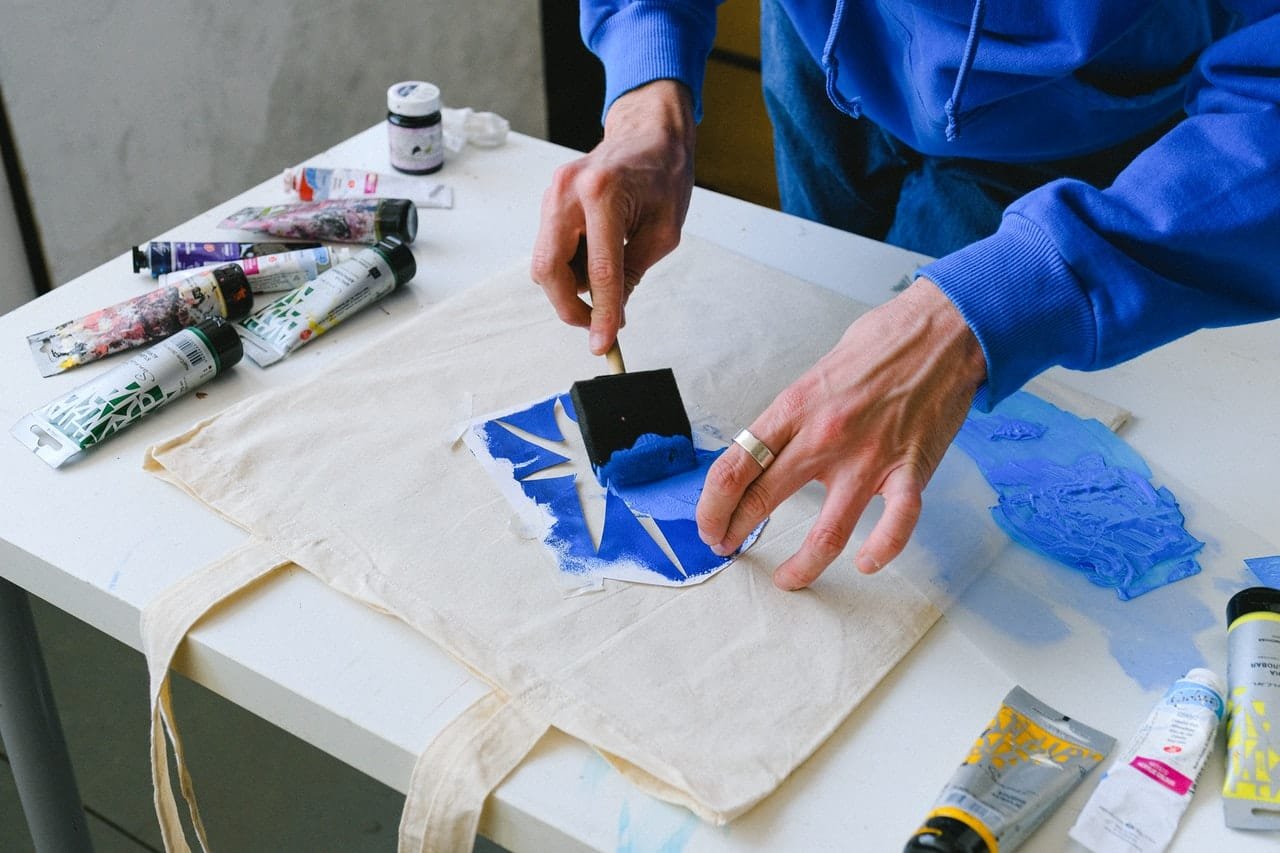
The screen printing of T-shirts has been providing customers with elegant, diverse and exquisite patterns for many years. Due to various factors, it has also been the preferred T-shirt printing technology for most textile and fabric printing industries. Although various strategies for T-shirt printing are now being developed and established, why do individuals still use screen printing technology? This is mainly due to the rewards there. So let us uncover what these are. Cost-effectiveness Compared to other printing technologies, T-shirt screen printing technology is very cheap, especially when creating multiple copies of this type of design. Therefore, if you have to deal with batch creation of duplicates, this is considered the best technique. This is not only good for consumers, but also good for entrepreneurs, because he will eventually get huge profits. is fast to execute This technology is definitely fast to execute because it takes less time to set up and print than other technologies. You only need the screen panel and other basic supplies to get started. The color dries quickly, so you can present the results to your customers immediately. In addition, it is simple and effortless, which is very suitable for panic buying. Any style can be achieved Of course, if you want to print large samples, screen printing is the perfect solution. You can mix large and complex styles and designs without causing any distortion of images or text. Therefore, you can choose any type of design you can think of. Versatility This technology is considered a versatile T-shirt printing technology because it can be used to print on various garments, garments and materials. It can even be used to print text and images on ceramics, paper, glass, plastic, fabric, linen, metal and other materials. is rugged and durable screen printing shows that it can produce sturdy and durable results compared to other strategies. Although the product is exposed to harsh environments, the color is still beautiful and delicate, and the product is durable. T-shirt screen printing is obviously an inexpensive method to quickly get your shirt off the ground without sacrificing quality.
DTG PRINTING
Direct Garment Printing (DTG) is a relatively new garment printing process that can be used for full-color printing directly on garments without the need for screen, transfer or sublimation technology. The DTG printer is a clothing printer. At the most basic level, it is an inkjet printer. It is usually based on the Epson printer principle and works in the same way as a printer that prints bills while sitting on a desk. The tray contains a roller, and the T-shirt is placed on the roller and then moves under the print head, just like the way paper passes through the printer. This has some small limitations in speed, but it can still generate full-color prints in a relatively short time. Why use? It is an excellent alternative to standard screen printing, which requires the screen to be created before the job starts. Transfer pressure is a good alternative, so that the initial number is usually larger to make them cheaper. But sweatshirts and polo shirts can also be very successful. The key is to test each piece of clothing until you are satisfied with the printed result. What are the benefits for customers? can be used for white and dark clothing. No sieve is required. An easy-to-obtain artwork. Only high-resolution JPEG is required. Uniform print quality after setting Even with a very delicate design, excellent details can be achieved. The maximum print area is A3. Set the speed What are the disadvantages of the process? In order to obtain the best print quality, it is best to use a single-head machine, so the process is slow and the operation time is longer. Color T-shirts need pretreatment. has the best operation. These may be small, about 12 T-shirts. The initial artwork must be of sufficient quality. The machine requires some maintenance and a certain level of maintenance to reach its full potential. This should be done every 3 days. Who is the ideal customer for digital direct-injection printing? Customers who need to design short versions (up to 50) with multiple colors. These are typical uses; hens and bachelor parties company events charity events small businesses that want to print a full-color logo in a short time promotional events magazine launch sports travel kids club. Fun gifts for surprise parties. Conclusion Direct printing on clothing can cost-effectively produce personalized T-shirts for one-time events or customers who do not need a large amount of clothing.
DYE SUBLIMATION PRINTING
Do dye printing fabrics have to be made of 100% polyester? Although you need at least 60% polyester to successfully dye the vacuum, it is best to use 100% polyester because if 100% of the fabric accepts the dye when it penetrates and penetrates the polymer in a gaseous form, you will Get excellent printed pores. You may not know how this process works and why polyester fabric is the best sublimation product, while cotton, wool or even nylon are not suitable for this type of printing. Starting from the dye, you must know that the dye and the inkjet ink using the CMYK (cyanmagentayellowblack) ink set are not the same type of ink, but use the CMYO (cyanmagentayellowoverprint clear) color set, which is clear, when it is printed on sublimation transfer paper When it becomes black and transfers in this way. After printing the paper, bind it, print the material you use on the side, and then feed it through a set of heating rollers. The heat must be higher than 190 °C (370 °F) for the dye to be converted into a gaseous form, and the polymer cell will open when it expands to accommodate the gaseous dye now in the cell. When this process is completed, the fabric cools, the cells are closed, and the color is permanently enclosed in the fabric in a beautiful hue, similar to the hue of a photo. Without the honeycomb structure of polyester fabric and its polymerization characteristics, sublimation printing would not be possible. The more polymer, the better. So the answer is of course yes and no.
We recommend using 100% polyester, but this is not absolutely necessary. What fabrics can be printed with sublimation printing? Any substance with a polymer cell structure. If this sounds Greek to you, check the answer above to understand why polymers are important, no, it is necessary for dye sublimation to work properly. However, many fabrics with different names are polymer fabrics, such as polyester. These include polyacrylonitrile (brand names Orlon and Acrilon), acrylic (same brand name as before), nylon (although it cannot be printed with dye sublimation), polyethylene terephthalate (polyester), spandex, and others Some of my head that I don’t remember. However, due to cost factors, availability and ease of use, polyester is the best and most affordable fabric for graphic printing. If you have a dye sublimation printer and heat press, be sure to try them. Maybe you will find something new! What are the advantages of sublimation printing on fabrics? Chapter What is the advantage! ? Sublimation printing provides you with the longest color of any type of printing on the fabric. The best flags are made of polyester because they are colorfast and windproof. The best printing method for garments is sublimation, because there are no ink deposits to prevent water from draining away from the body. On textile graphic displays or artistic reproductions used indoors, since they are enclosed in a sealed polymer battery, the color can be guaranteed to last for 30 years or more. Another benefit of banners, displays or clothing made of dyed polyester fabric is that you can wash them for many years without fading. I have a shirt with a “Hawaiian style” sublimation floral print, hung in the sun to dry, and will not fade after a few years, which is different from my cotton print shirt. Although I can point out other benefits, the last one is the rich colors on the polyester fabric. Since the dye is converted into gas during the thermal transfer process, the tones are mixed together, so that the quality of the printed photo is unparalleled in any other printing process.
At this point, no other method can achieve continuous tone printing. continuous tone printing is achieved through dye sublimation process. Use CMYO (cyan, magenta and yellow overprint varnish) to print the dye on the transfer paper. After the paper is printed, it will be matched with the banner, Oxford cloth, satin, outdoor, stretch fabric ordered by the customer, and sent through a heated roller at approximately 400 degrees Fahrenheit. When the fabric and transfer paper are combined through this heat and pressure, the dye printed on the paper will immediately turn from a solid to a gas, and merge with the fabric to form a halftone print similar to a photo. Differences The difference between most printing of fabrics and sublimation printing is that most printing, including screen printing and all types of digital printing, use dot patterns to create colors, while the tones of sublimation printing are continuous. Pass your camera like a developed image. So, I think this means that my first answer is correct, at least for textile printing. Other substrates are suitable for certain things, but for the most classic look, you should definitely consider dye fabric printing. Another plug for the dye-printed monitor, if you are at a competitive trade show or similar, and your competitor has some beautiful graphics on vinyl or similar, and your fabric monitor is printed in continuous tone , Then you’ll have to do subconscious wars to win victory.